Sutherland Scott
About the author

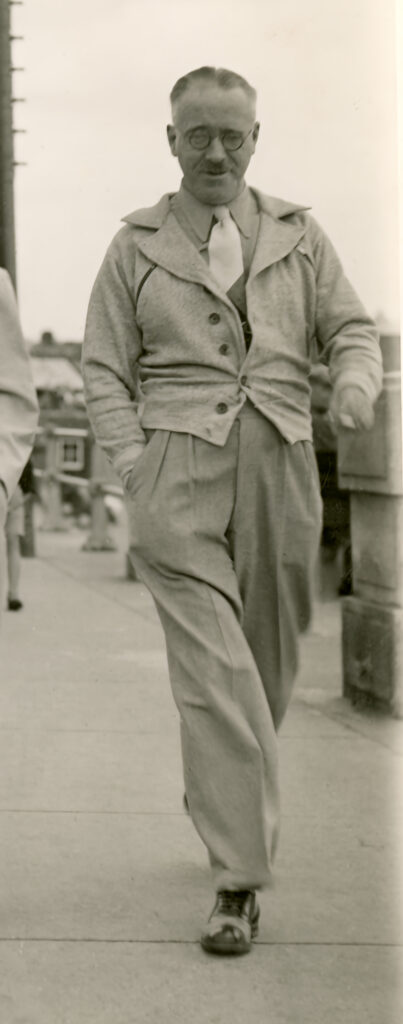
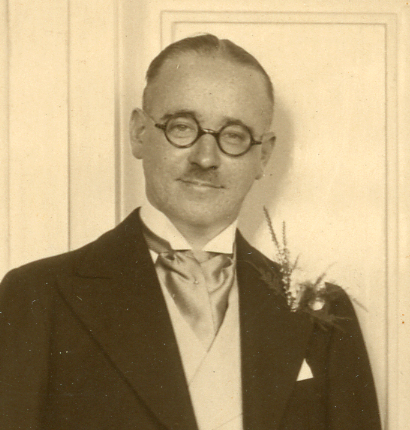
Sutherland Scott is the pen name of Dr. William Clunie Harvey ... British Medical Officer, lieutenant colonel in the Royal Army Medical Corps, and murder mystery writer extraordinaire.

“Many mysteries in the realm of medicine still await solution. When they are solved, those of us who escape the hazards of the atomic age and the more immediate menace of the automobile, will presumably live to the ripe old age of the patriarchs. Meantime, medicine has its mysteries, more tragically real, more incomprehensible than any yet devised by the human mind.

The roles of doctor and detective are closely parallel. Both have to collect information, break down resistance, sift available evidence, discard, collate and re-assemble. Each must probe until he is satisfied that nothing has been missed; each must learn what to believe and what not to believe.”

Sutherland Scott, “Blood in Their Ink” (1953)

Sutherland Scott (pen name of Dr. William Clunie Harvey) was born on August 3rd, 1900, in the Scottish burgh of Govan (now part of Glasgow). His illustrious medical career took him from a Bachelor of Medicine and Bachelor of Surgery (M.B., Ch.B.) at Glasgow University in 1923, to a Diploma in Public Health (D.P.H.) in 1927, then a Doctor of Medicine (M.D.) degree with high commendation in 1928.
In 1924, he served as an assistant tuberculosis officer for the City of Birmingham, a role that placed him at the forefront of addressing a significant public health challenge of that era. From 1925 to 1928, he further broadened his expertise as an assistant medical officer in the infectious hospitals service and an assistant bacteriologist within the research and pathological services for the Metropolitan Asylums Board. These positions provided him with invaluable hands-on experience in managing infectious diseases, conducting epidemiological investigations, and contributing to vital medical research.
In 1931 he was appointed Medical Officer of Health (MOH) for Southgate, which soon expanded to include serving as MOH for Wood Green, Friern Barnet, and Potters Bar. Dr. Harvey was also a Fellow of the Society of Medical Officers of Health, a Fellow of the Royal Society of Health, and a Fellow of the Institute of Public Health and Hygiene. In 1964 he was elected freeman of the borough of Southgate in recognition of his life’s work. In 1970, the William C. Harvey School in Tottenham, for special needs children, was named after him, honoring his invaluable contributions to healthcare in the community.
William C. Harvey
During the tumultuous period of the Second World War, Dr. Harvey’s public service extended significantly to civil defense. Dr. Harvey was in charge of the Casualty Services in Southgate during the blitz, and he played a crucial role in leading the civil defense casualty service in Southgate, coordinating responses to wartime emergencies and ensuring public safety. Towards the end of 1942, when “things seemed quiet” at home, he was given permission to join the Armed Forces and, in 1943, joined the Royal Army Medical Corps (R.A.M.C.), directly contributing his medical expertise to the war effort.
In 1944, he was sent to Western Europe, first to Belgium and France, and later into Germany. “I enjoyed every minute of my stay in France,” he said. “I learnt a great deal, I saw what other people were trying to do, I found my experiences as a Medical Officer of Health invaluable.”
In Germany, he was put in charge of the many camps on the bank of the Rhine through which prisoners of war and deported nationals from Western Europe were continuously passing. He had to reorganize the medical services for these camps, open hospitals, appoint medical officers, make arrangements for babies to be born, treat cases of typhus fever, and arrange for surgical operations to be carried out.
He also had the even more difficult job of getting the German Public Health system in his area back on its feet. “I used to have to go to small towns,” he said, “see the Burgomaster and ask for the Medical Officer of Health. If there was no Medical Officer of Health—and, believe me, there seldom was one—I paraded the few general practitioners, mostly old men, who still remained and made an appointment.”
Medical supplies were almost non-existent, supplies of diphtheria antitoxin unavailable, even during an epidemic, and anesthetics in very short supply. He said if he had known the extent of the problems before being sent, it would have given him a nightmare. Once his work in Europe was completed, Dr. Harvey returned to civil life in 1946, with the honorary rank of Lieutenant-Colonel.

Dr. Harvey was also a prolific writer. Apart from being senior author of such textbooks as “Milk Production and Control”, “Milk Products”, “Insect Pests”, and “Food Hygiene”, he was also a monthly contributor to “Better Health” and wrote countless articles for professional journals and the national press.
Dr. Harvey also wrote an operetta and several plays, and was involved in the Southgate A.R.P. (Air Raid Precautions) Entertainments Association, and was chairman of the Intimate Theatre Playgoers Association in Palmers Green, London. This theatre, originally built in 1931 as a church hall for St. Monica’s Roman Catholic Church, was transformed into a professional repertory theatre in 1935. It gained significant recognition, notably serving as a venue from which the BBC televised 14 plays in the late 1940s, and was described as “the home of so many present-day stars of stage and screen”.
His most notable contribution as an author, however, is as the murder-mystery writer Sutherland Scott. The name is a combination of his Scottish heritage (his grandfather’s blacksmith’s forge still stands in Wigtownshire, Scotland) and his mother’s name: Catherine Sutherland Waters.
As Sutherland Scott, he wrote 13 novels between 1936 and 1956, plus 1953’s widely published history of the modern detective novel “Blood in Their Ink”. His work has been republished in the United States, and translated into French, Turkish, and Japanese.
His novels frequently featured medical themes or settings, providing an authentic and informed backdrop for his narratives. His recurring detective, Dr. Septimus Dodds, was himself a medical doctor and consulting detective, directly embodying the fusion of Harvey’s two professional worlds.
Dr. Harvey married Winifred May Brown (1903-96) on 15 September 1933. Together they had four children: Winifred Harvey (b 1934, died in infancy), Dr. Ian C. Harvey (1937-2020), Gillian A. Harvey (1938-2018), and Dr. Michael S. Harvey (1941-x).
Dr. Harvey retired on 19 October 1963.
Dr. Harvey suffered a stroke in xxxx and died in hospital on 12 June 1967 at the age of 66.